Rooted For Growth
Developing parents and children relationships
Developing Healthier Relationship Experiences
The Mentorship Program Overview
This program aims to work and engage with young people and parents; many of whom may have had adverse childhood experiences.
The program has been designed from experiences of working with young people in school settings and parents/adults. The program is built on principles of trust, engagement and positive change-management and uses a number of different approaches from mentoring, family systemic input and solution focused thinking.
The program recognises that a child is not separate from their family unit but acts within the depth of their family environment. As such the program has been built to work with both young people and their parents.
Overall, the purpose of the program will be to support schools to steer the trajectory of challenging behaviour to support young people to reach their potential and engage in behaviours that produce positive rewards.

The Essence of Building Trust
It is important that trust is built with both young person and parent when working using a family systemic model. Some families from disadvantaged backgrounds may be challenged with building trust. A lack of trust can be reflective of pre-conceived ideologies or a fear or authority. Nonetheless issues of trust can make any teacher, with good intentions, find it challenging to engage with both young people and/or parents who are expressing unhealthy behaviours.
It is therefore important that the mentor builds trust, with the child and parent, over a period of time.

Parental Outreach Programme Model
Home life has been one of the main contributing factors that has stopped students from flourishing for several various reasons. Without parent’s support and engagement with the school and mentors’ students, learning development can be affected. The outreach parent programme is a 9-week intervention plan to capture key issues to explore, uncover and recover lost potential in the home. This will include building trust between parent, mentor, and school. Some parents due to their background find it difficult to engage with schoolteachers and staff or people in authority. The RFG team act as an advocate on the school’s behalf and the parents too.
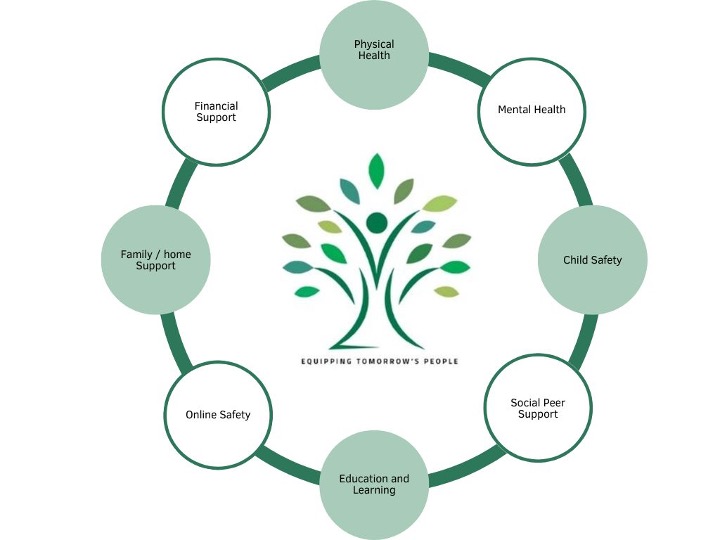
- Physical health – where necessary, we will offer support and advice where to get help from.
- Mental health -understanding the state of comfortability or any issues preventing parents from supporting their child and school. Offering non-judgmental attitude with listening ears with a solution focus approach. Therapies – Specialist counsellors that offer talking therapies are involved with the programme.
- Child safety – awareness of things that will distract their children from learning/development to different forms of crimes. Encourage and show parents how to deal with boundaries and behaviour enabling them to identify children who are at risk of truancy, crime, and non-submission of homework.
- Social peer support – encourage and inspire confidence in parents who isolate themselves.
- Education and learning – Support parents into adult education courses if there is a need. Also, to understand if they are keeping an eye on their child’s learning development.
- Online safety – awareness of social media and online safety to safeguard children and help their families notice any signs of misuse.
- Family/home support – how to support their child at home, with their learning and development. This also means structure at home. where some families are struggling with various issues, we will sign post where they can get support (according to each need). Counsellors are also on hand to help navigate housing support, employment, healthcare, mental health and more.
- Financial support – As part of the programme a chartered accountant is on hand to support families with 1:1 support covering finances, money management and basic business set up.

Early Intervention
The programme has been designed for use in early intervention where teachers identify students who have no emotional regulation and need behavioral management and aims to prevent the onset or development of anti-social behavior, disruption in class, disrespecting teachers.
A combination of both individual 1 to 1 sessions and group sessions to maximise involvement for pupils where they feel comfortable and get the most from the programme. Groups sessions being effective for base knowledge, idea formation and giving students a safe space. Following on with 1 to 1 session where mentors are able to really focus individual pupils on their personal needs and develop strategies.
These sessions whether 1 to 1 or group will be based around six strategic areas all of which are designed to open-up the conversation between mentors and students

Stages of Change
Where there are Year 11 students who are showing signs of dropping grades and are at risk of not achieving the schools’ expectations, the stages of change captures where young people are in six key outcome areas intended to complement a sometimes-narrow focus on exam results:
Staffing
Contact Us
Ask a question or book an appointment below.